Pallet Shipping Preparation
Ensure stability and safety of heavy cargo in transit with Couriers for Less
Selecting the Right Pallet
Suitable Pallet
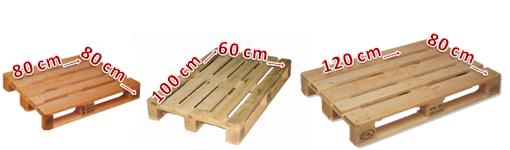
- ■ Use only sturdy, sound, wooden or plastic pallets.
- ■ Standard "Euro" pallet dimensions are 80x120 cm.
- ■ The pallet must withstand the intended cargo weight (up to 700-900 kg).
Unsuitable Pallet

- ■ Do not use broken, cracked, or structurally compromised pallets.
- ■ Avoid non-standard dimension pallets not adapted for safe transport.
- ■ Damaged or weak pallets may break during transport.
Cargo Stability
Proper Loading

- ■ Place the heaviest items at the bottom and lighter ones on top.
- ■ Form cargo with as flat a surface as possible to allow stacking.
- ■ Ensure cargo does not exceed allowable height limits.
Improper Loading
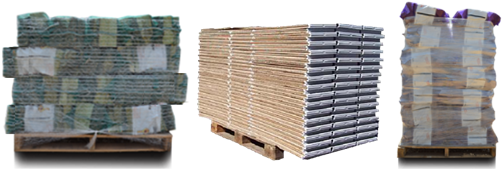
- ■ Avoid "pyramid" shaped loading as it complicates transport.
- ■ Do not keep heavy items on top, as this makes the cargo unstable.
- ■ Do not allow boxes to extend beyond the pallet edges.
Cargo Securing
Proper Securing
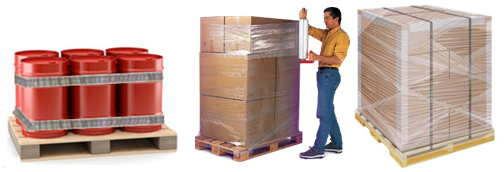
- ■ Cargo must be tightly wrapped with stretch film in at least 3-5 layers.
- ■ The film must also wrap around part of the pallet base to prevent cargo from slipping.
- ■ Use corner protectors (cardboard or plastic) to protect boxes from indentations.
Improper Securing

- ■ Insufficiently wrapped cargo or a too-thin film layer may disintegrate during transit.
- ■ Without securing to the pallet base itself, cargo may slip off the pallet.
- ■ Lack of corner protectors can lead to box deformation and damage during strapping.
Important: The pallet must be adapted for mechanized loading (have space for fork truck tines). Couriers may refuse improperly prepared pallets.